
How 250–280 Apples Translate to Cups Sold
The headline number—250 to 280 apples—is meaningless until you convert it into revenue. A standard 8-ounce cup requires roughly 2.2 apples of average size (Gala or Fuji) to fill, depending on the press efficiency of the machine’s auger system. A fully loaded hopper of 250 apples produces nearly 120 cups. Push that to 280 apples, and you get more than 100 cups, with the exact count swinging between 115 and 130 based on variety and ripeness. The variance is not a defect; it is a function of water content in the fruit.
Here is the revenue table that matters for your business plan:
| Apples Loaded | Cups Produced (8 oz) | Revenue at $3.50/cup | Revenue at $4.00/cup |
|---|---|---|---|
| 250 | ~120 | $420.00 | $480.00 |
| 265 | ~125 | $437.50 | $500.00 |
| 280 | ~130 | $455.00 | $520.00 |
Restocking cadence depends on your sales velocity, not on emptying the bin. At a busy location moving 40 cups per day, a full load lasts three to four days. At a slower site selling 15 cups daily, you can stretch that to a week. The critical operational insight is this: ‘fully loaded’ means the hopper is filled to capacity at the start of the cycle. You do not need to sell every apple before refilling. In fact, you should top off the hopper whenever it drops below 40% to avoid running dry during a peak hour.
The practical implication? One machine, one weekly restocking trip, and a gross margin that hovers around 85% after fruit cost. That margin is why operators in airports and corporate cafeterias are installing these units in clusters of three or four.
Technical Specs That Matter: Power, Payments, and Footprint
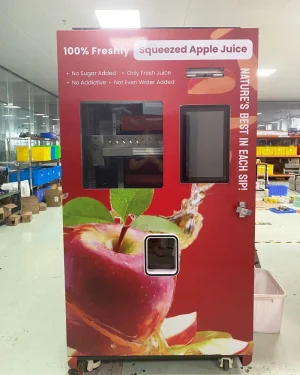
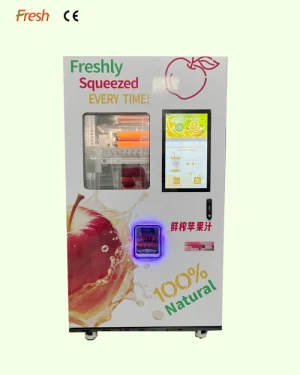
Before you sign a lease for the floor space, you need to know what the machine demands from your facility. The typical unit—such as the Foodline Machinery FL-2000—draws between 500 and 800 watts during operation, with a standby mode that drops to under 50 watts. At an average of 0.6 kWh per hour of active use, the daily energy cost runs about $1.50 at the national average of $0.10 per kWh. That is $45 per month, which is less than the cost of a single case of organic apples.
Voltage is a non-negotiable spec. Most models ship in either 110V or 220V configurations. Confirm your location’s supply before ordering; a 220V machine plugged into a 110V outlet will trip breakers and damage the compressor. Dimensions typically range from 30 to 36 inches wide, 28 to 32 inches deep, and 70 to 78 inches tall. The footprint is roughly the size of a standard snack vending machine, but the weight—often 400 to 500 pounds empty—requires a reinforced floor or a sturdy dolly for installation.
Payment processing is where modern units separate themselves from older models. The standard configuration includes a bill acceptor, coin changer, and a card reader that supports contactless mobile wallets like Apple Pay and Google Wallet. Most units also include a 4G LTE modem for remote monitoring. You can check apple inventory, cup levels, and daily sales from a web dashboard or a mobile app on your phone. That telemetry eliminates the guesswork about when to restock.
Food safety components are not optional. Look for a stainless steel interior (grade 304), a UV sterilization lamp inside the juice chamber, and a refrigerated cabinet that holds apples at 4°C (39°F). Without temperature control, the apples will oxidize and the juice will brown within hours.
Customization and Compliance: Branding, Certifications, and Food Safety
Your machine does not have to look like a white box from a factory floor. Suppliers offer custom vinyl wraps with your logo, brand colors, and even a digital screen that cycles through promotional messages. A gym in Chicago branded its machine with its own logo and saw a 22% increase in sales simply because the unit looked like part of the facility, not a rented appliance. Payment systems can also be customized—some operators integrate with existing campus card systems or corporate badge readers for employee-only discounts.
Compliance is where buyers get lazy, and that is a mistake. Before you wire a deposit, demand documentation for CE (European Conformity), UL (Underwriters Laboratories), and NSF (National Sanitation Foundation) certifications. These are not stickers for show. They determine whether your insurance policy covers the machine and whether your local health department will approve the installation. A health inspector in New York City will flag an uncertified juice machine immediately, and the fine for operating without approval starts at $500 per day.
Ask the supplier for a certificate of compliance that lists the specific model number, not a generic brochure. Also request a copy of the food contact material test report, which verifies that the stainless steel and plastic components do not leach chemicals into the juice. The FDA requires this under 21 CFR 177 for materials that contact food. If the supplier hesitates to provide these documents, walk away.